Precautions before marriage in India. Why living in a rented home can protect you legally
In Indian marriages, whether arranged or love marriages, families often highlight financial status and assets while discussing the match. A recurring trend is the groom’s side showcasing wealth, especially property.
Phrases like “This flat has been purchased exclusively for the couple to live in after marriage” are common during initial discussions.
While this may seem harmless, it can create serious complications during matrimonial disputes or divorce cases if the relationship later breaks down.
When marital disputes begin, property often becomes the first point of conflict
One of the most frequent patterns in troubled marriages is the issue of possession of the matrimonial home.
If disagreements escalate or the marriage turns bitter, the wife may attempt to take possession of the house, regardless of:
- Whether the property is in the husband’s name
- Or in the name of his parents
- Or a sibling
- Or owned jointly by other relatives
This happens even when the husband’s family had originally shown the house only as a comfort or benefit during marriage discussions.
Right to reside under the domestic violence act
Under the Domestic Violence Act, the wife has a legally recognised right to reside in the shared household.
This right can apply even when the house:
- Is not owned by her husband
- Is owned by in-laws
- Is in the name of extended family members
Because of this right, the question of possession of the residence becomes the first point of contention during matrimonial disputes or domestic violence proceedings.
This often leads to:
- Applications claiming residence rights
- Attempts to occupy the property
- Disputes over who has control of the household
This is why showcasing property during marriage discussions or living in a family-owned flat immediately after marriage can create avoidable complications later.
Why newly married couples should consider staying in rented accommodation
For the initial years of marriage, the phase where the couple is still adjusting, learning about each other, and building stability, it may be safer to stay in a rented home rather than a house owned by the husband or his family.
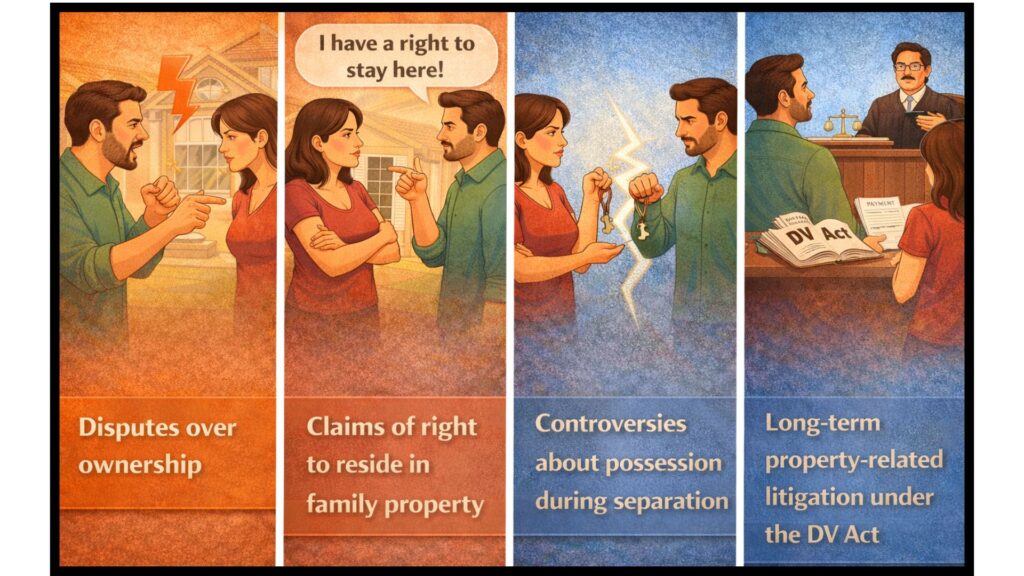
Living in a rented home helps avoid:
- Disputes over ownership
- Claims of right to reside in family property
- Controversies about possession during separation
- Long-term property-related litigation under the DV Act
A rented accommodation provides legal clarity, reduces emotional pressure on families, and avoids the impression that the wife has a permanent claim over a property that does not belong to the couple jointly.
How this precaution reduces complications in divorce or matrimonial disputes
When a marriage faces conflict, living in a rented home:
- Prevents arguments about being “thrown out” of a family-owned house
- Minimises residency disputes under the DV Act
- Protects family-owned assets from becoming part of the conflict
- Makes separation or reconciliation logistically simpler
- Reduces the possibility of property-related allegations
This simple precaution is especially relevant in the early years of marriage, before the relationship becomes stable and predictable.
Conclusion
In India, property plays a major role in how marriages are viewed and negotiated.
But during divorce cases and domestic violence disputes, the same property often becomes a source of conflict.
A practical precaution is:
Avoid living in a family-owned flat during the initial years of marriage. Choose a rented home instead.
This protects both families from unnecessary disputes, reduces legal complications under the Domestic Violence Act, and ensures that property does not become the first battleground in a matrimonial conflict.
In this video, Amish Aggarwala, Advocate on Record at the Supreme Court of India, discusses the legal position and judicial approach to the issue in the context of matrimonial litigation
