In India, wedding expenses often involve contributions from both families.
But a major issue that later appears in dowry complaints, matrimonial disputes, and divorce cases is the way these payments are handled.
A common situation occurs when the bride’s family insists on transferring their share of the wedding expenses directly to the groom or his family.
While this may seem convenient during wedding preparations, it can create serious complications if the marriage experiences conflict later.
When “50–50 wedding contribution” turns into a dowry allegation
Many families agree to split wedding expenses equally.
The bride’s side often says:
- “We are spending 50–50.”
- “We’ll transfer our share to your account; you spend as needed.”
However, once the relationship deteriorates, the same transfers may later be claimed as:
- Dowry (dāhej)
- Illegal demands
- Financial pressure created by the groom’s family
This creates legal complications under dowry laws and can significantly affect matrimonial proceedings and divorce litigation.
How innocent wedding payments become evidence in dowry disputes
If the bride’s family has transferred large sums directly into the groom’s or his relatives’ personal bank accounts, they may later state that:
- These transfers were forced
- They were demanded as dowry
- They were not voluntary contributions
- They were paid under pressure related to the wedding
Since bank transfers create a permanent record, these transactions may be reinterpreted during:
- 498A dowry harassment complaints
- Divorce proceedings
- Matrimonial disputes involving financial claims
The same money that was intended for catering, décor, or venue booking can suddenly be projected as dowry.
A safer approach, direct vendor payments
To avoid such complications, one precaution is clear:
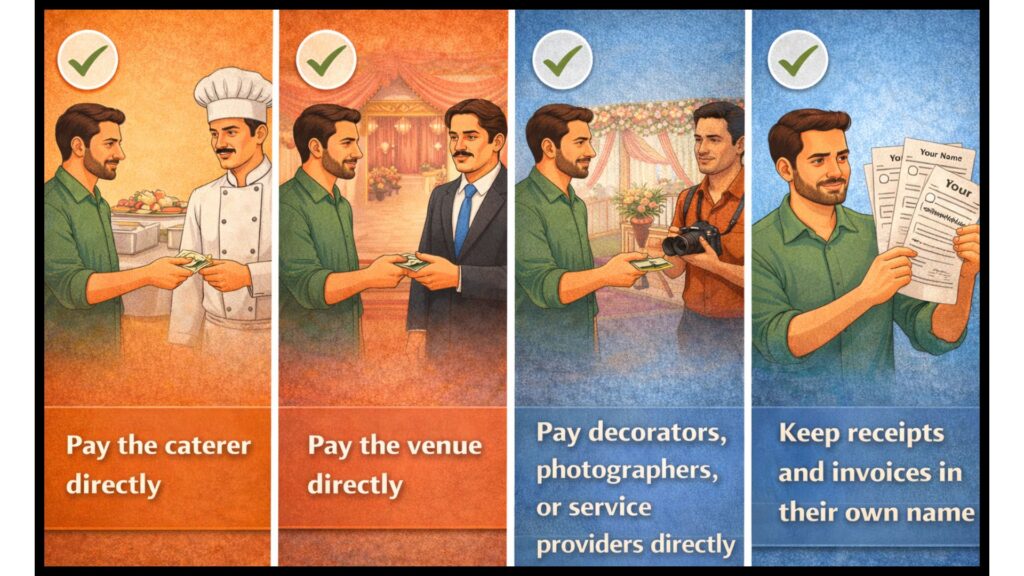
The bride’s family should pay their share of expenses directly to the vendors, not to the groom’s account.
This means:
- Pay the caterer directly
- Pay the venue directly
- Pay decorators, photographers, or service providers directly
- Keep receipts and invoices in their own name
This ensures transparency and prevents later claims that money transferred to the groom was dowry disguised as wedding expenses.
Why this matters in future matrimonial or divorce cases
When marriages face conflict, financial transactions are often examined closely.
Transfers into the groom’s account may be misunderstood or misrepresented, leading to:
- Allegations under dowry laws
- Claims of financial exploitation
- Complications in divorce cases where the wife’s family demands return of “dowry”
- Additional legal pressure during matrimonial disputes
Avoiding pooled transfers protects both families from confusion and unnecessary legal complications.
Conclusion

A key precaution before marriage in India is ensuring clear and traceable financial practices, especially regarding wedding expenses.
Transferring the bride’s family’s share directly into the groom’s account may later become a point of dispute, including allegations of dowry.
A safer and more transparent approach is:
- Each side pays vendors directly
- No money is routed through personal accounts
- All payments remain clearly documented
These simple steps help prevent misunderstandings and protect both families from unnecessary legal complications in the future.
